Section 01 of 06
Matryoshka and Nesting Doll Guides
From Sergiev Posad workshops to Semyonov roses: a century of turning and painting, read through the piece itself.
- 01
- 3 guides
- The St. Petersburger desk
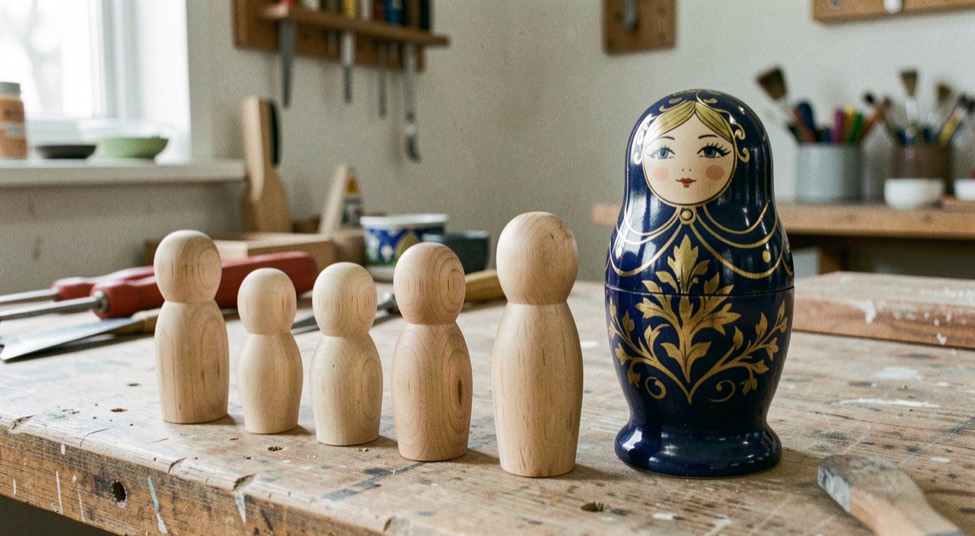
The nesting doll looks like the oldest toy in the world and is in fact a young one: it was born in the 1890s, in a workshop connected with the Abramtsevo circle, and became a world commodity within a decade. That short, well documented history is good news for a collector, because the styles it produced are distinct enough to be learned from the object in your hands.
This section follows the doll from Vasily Zvyozdochkin’s lathe and Sergey Malyutin’s brush to the workshop towns that still define its look, then gives the practical signs of a hand painted set: wood, fit, lacquer, signature. Prices stay in honest ranges, and every claim is kept to what workshops and museums actually document.
In this section
-
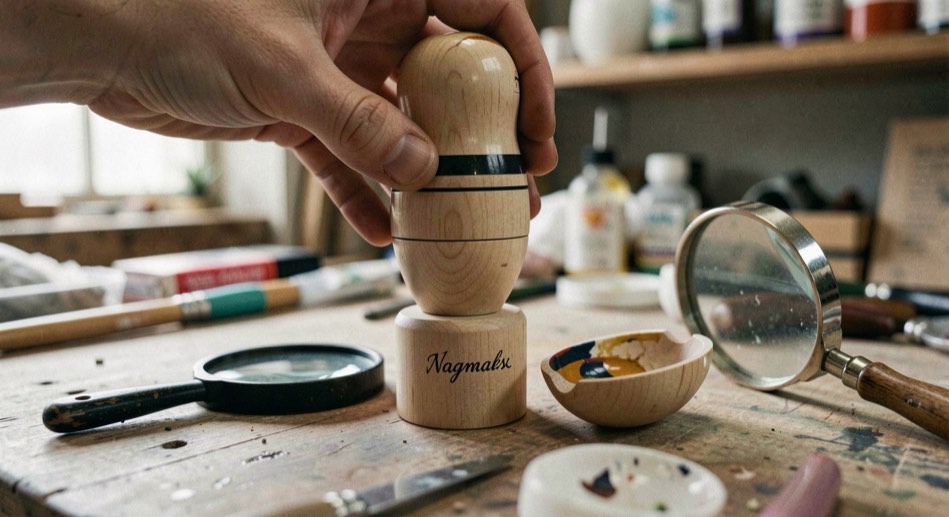
Genuine or souvenir: reading a matryoshka in hand
A nesting doll testifies on its own body: the wood, the seam, the varnish and the base each answer one question, and together they settle the price.
-
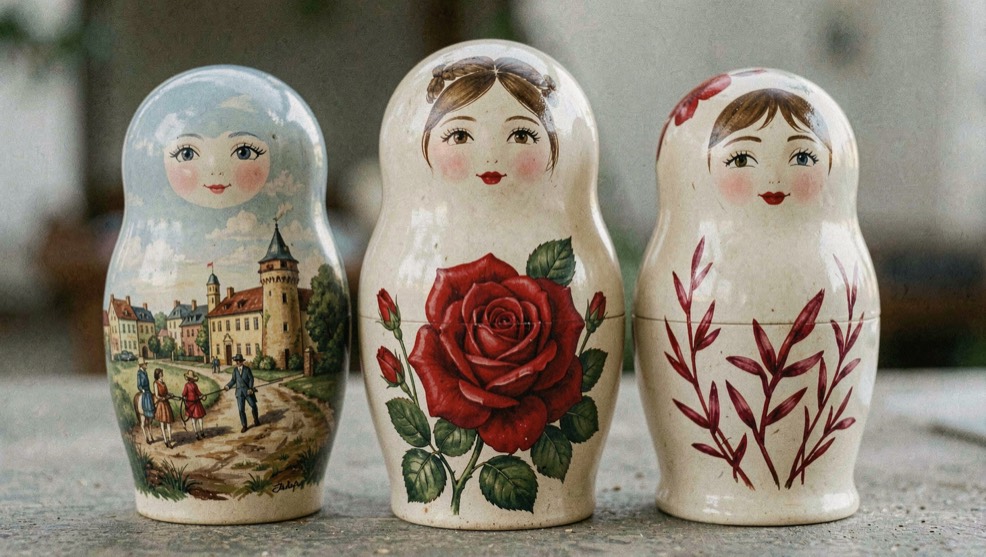
Three workshop styles and how to tell them apart
Same toy, three accents: the workshop towns never agreed on shape, palette or flower, and that disagreement is the collector’s best map.
-
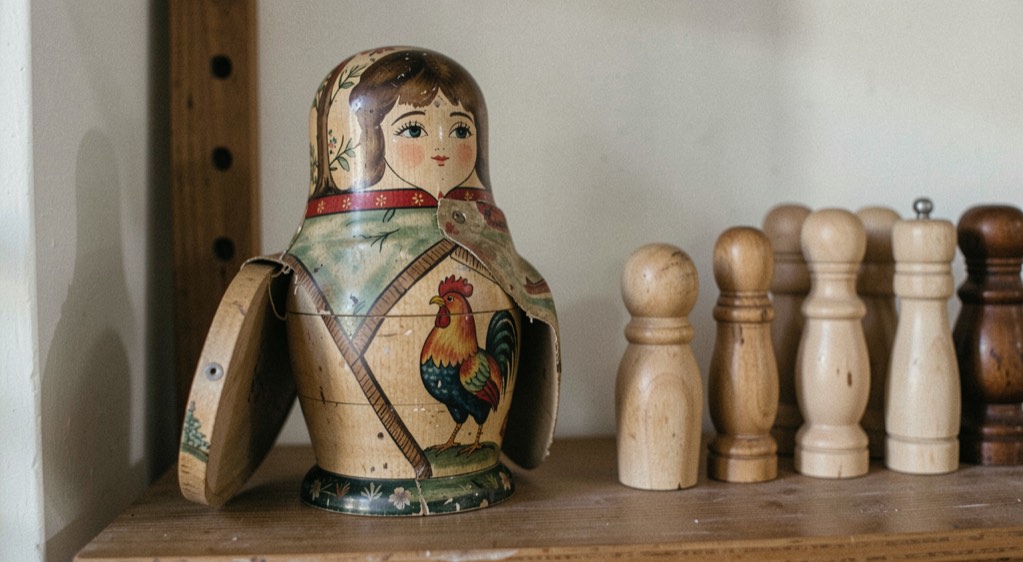
A short history of the matryoshka
It looks ancient and is not: the doll was born around 1890 from a turner’s lathe, a painter’s brush and a Japanese idea, and was world famous within ten years.
Two neighbouring sections continue the story: Amber & Jewelry and Painted Crafts. The recognition rules shared by every craft are collected in the guide to spotting fakes.